The optimal period for Sumba retreats spans April to October, aligning with the island’s dry season. This window offers consistently clear skies, lower humidity, and ideal conditions for wellness, surf, and cultural exploration. However, unique experiences, such as the Pasola Festival, require precise timing in February or March, offering a different, verdant perspective.
- Dry Season (April-October): Peak for Nihiwatu, surf, and general outdoor activities.
- Wet Season (November-March): Offers lush landscapes, fewer guests, and unique cultural events like Pasola.
- Pasola Festival (February/March): A specific, highly sought-after cultural pilgrimage requiring advance planning.
The air shifts on Sumba, a subtle drying breeze signaling the island’s rhythm. Light sharpens, casting deep shadows across the undulating landscape. This is Sumba, an island operating on its own ancient clock, where the finest experiences align with specific seasonal nuances.
The Dry Season: April to October – Sumba’s Zenith for Retreats
From April through October, Sumba enters its dry season, a period revered by those seeking the quintessential island retreat. The skies consistently present a brilliant, cloudless expanse, and the humidity recedes, creating an atmosphere of crisp clarity. This six-month window is Nihiwatu Resort’s prime operating period, where guests experience the highest levels of comfort for outdoor activities. Average daytime temperatures hover around 28 to 32 degrees Celsius, ideal for beachfront yoga sessions or exploring the island’s interior.
The Indian Ocean swells arrive with predictable consistency during these months, making May to September particularly strong for surf enthusiasts. Nihiwatu’s famed Occy’s Left break, accessible to a limited number of surfers daily (just ten permits issued), offers world-class waves. Beyond the surf, the dry season facilitates extensive exploration of Sumba’s megalithic villages and traditional ikat weaving communities. Distances between points of interest, such as the 90-minute journey from Tambolaka Airport (TMC) to Nihiwatu, are traversed on well-maintained, dust-free roads. Lelewatu Resort also sees its highest demand during this period, with its 12 private villas offering uninterrupted views of the coastline. Guests planning a 5-10 day retreat for executive recovery or family bonding often find this period provides the most predictable and pleasant conditions for a transformative experience. Mandara Spa treatments, whether oceanside or within the sanctuary of the resort, are enhanced by the gentle, consistent breezes. The island typically receives less than 50mm of rain per month during this time, ensuring minimal disruption to planned activities.
The Wet Season: November to March – A Verdant, Intimate Sumba
As November arrives, Sumba transitions into its wet season, a period often misunderstood by those unfamiliar with its unique charm. This is not a season of perpetual downpour; rather, it’s a time of intermittent, often dramatic, tropical showers that transform the landscape into an extraordinary palette of greens. The air becomes rich with the scent of damp earth and blooming flora. For the UHNW transformation seeker, this period offers a different kind of retreat: one of profound introspection and quiet contemplation, often with fewer guests on the island. Resorts like Nihiwatu and Lelewatu operate with a serene calm, offering personalized attention. The Mandara Spa experience deepens, with rain-kissed windows framing lush vistas, fostering a sense of secluded tranquility. Daily rainfall averages around 200-300mm during the peak months of January and February, but these showers are often intense and short-lived, followed by periods of clear, humid sunshine.
Photography enthusiasts find this season particularly rewarding, as the light becomes softer, and the verdant hillsides provide a dramatic backdrop. While some roads to remote villages can become challenging, this often means deeper engagement with local culture, requiring a more adventurous spirit and often a 4×4 vehicle. The Waingapu (WGP) region, on Sumba’s eastern side, tends to experience slightly less intense rainfall than the west, offering alternative exploration opportunities. For those prioritizing breathwork and meditation, the ambient sounds of tropical rain create a natural, calming soundtrack. Aircraft operations into Tambolaka (TMC) remain consistent, though occasional delays due to weather can occur. This season also brings a unique opportunity for cultural engagement, culminating in the Pasola festival, a highlight for many discerning travelers seeking a genuine connection to Sumba’s ancient heritage. Maringi Cliff House, with its intimate setting, becomes a sanctuary for those seeking profound rest amidst nature’s vibrant display.
Pasola Festival: February/March – A Cultural Pilgrimage
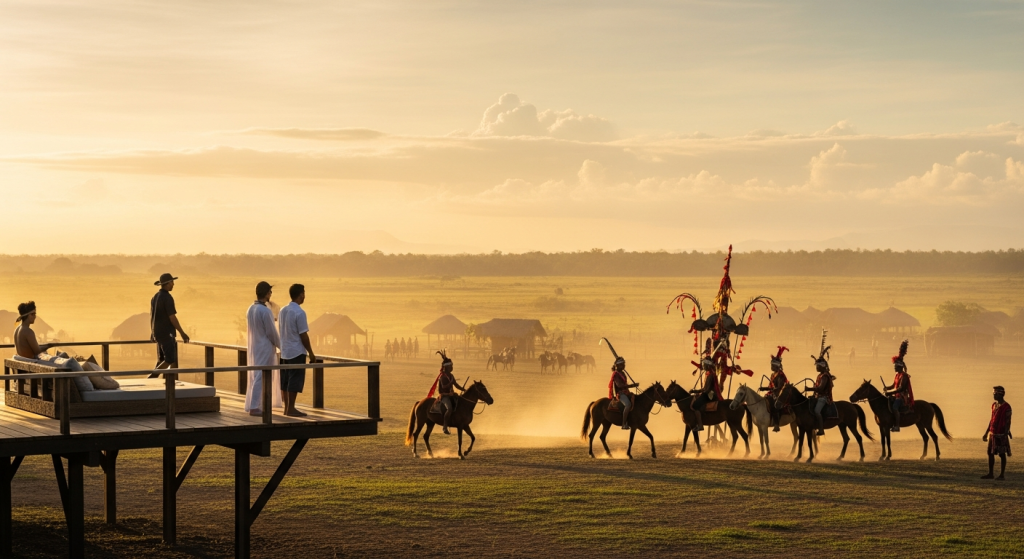
The Pasola Festival stands as Sumba’s most revered cultural event, a ritualistic jousting ceremony deeply rooted in Marapu animist beliefs. Its exact timing is determined by the full moon and the appearance of specific sea worms (nyale worms), typically falling in February or March each year. This makes booking a Sumba retreat during this window a precise exercise in planning, often requiring reservations 12-18 months in advance. The festival occurs in four primary locations across West Sumba: Kodi, Lamboya, Wanokaka, and Gaura, with the most accessible sites often near Tambolaka (TMC) airport, approximately 45 minutes to 1.5 hours drive from Nihiwatu Resort. Witnessing Pasola is not merely an observation; it is a pilgrimage into the heart of Sumbanese identity, a raw, powerful display of horsemanship, courage, and ancient tradition. Wikipedia provides further context on its historical significance.
For UHNW guests, securing VIP access and understanding the cultural sensitivities of Pasola is paramount. Resorts like Nihiwatu and Lelewatu facilitate these unique experiences, often providing expert local guides who offer invaluable insights into the ceremony and its profound meaning. The festival involves hundreds of horsemen, clad in traditional attire, mock-fighting with wooden spears on horseback. This event is a powerful draw for those seeking truly transformative experiences beyond typical luxury wellness. Travel during this period coincides with the tail end of the wet season, meaning guests should be prepared for potential rain and muddy conditions, which only add to the authenticity of the experience. The energy is palpable, a stark contrast to the serene quiet of other retreat periods. Planning for Pasola requires flexibility and an openness to the unpredictable nature of an ancient ritual, making it a truly exclusive opportunity for a select few. Flights into Tambolaka (TMC) are crucial for accessing this region of Sumba. The festival is a testament to the enduring spirit of the Sumbanese people.
Surf Seasonality: May to September – Riding the Indian Ocean Swell
Sumba’s position in the Indian Ocean grants it exceptional surf conditions, particularly during the dry season months from May through September. This period sees consistent groundswells generated by distant southern ocean storms, delivering powerful, clean waves to the island’s exposed coastline. Nihiwatu, renowned globally for its exclusive access to Occy’s Left, carefully manages its surf program, allowing only ten surfers per day to ensure an uncrowded, pristine experience. This strict limit elevates the surf experience to a private, almost spiritual communion with the ocean. The wave itself is a long, powerful left-hander, best suited for intermediate to advanced surfers, breaking over a reef. Surf guides at Nihiwatu, often local experts with decades of experience, provide personalized coaching and safety. Indonesia.travel highlights Sumba as a premier surf destination.
Beyond Occy’s Left, Sumba offers a range of other breaks, from more mellow reef breaks suitable for longboarding to powerful barrels for the seasoned professional. The water temperature remains a balmy 26-28 degrees Celsius year-round, making wetsuits largely unnecessary. For those new to surfing, or seeking to refine their technique, Nihiwatu offers comprehensive surf lessons and a supportive environment. The absence of strong currents and the consistent offshore winds during these months contribute to ideal wave formation. Guests on a Sumba retreats surf-luxury wellness program often combine daily rides with deep tissue massages at Mandara Spa, targeted yoga for surfers, and restorative breathwork sessions. The dry season’s clear skies and minimal rainfall ensure full days on the water without interruption. Even for non-surfers, watching the powerful waves break from the comfort of a cliffside villa or a beachside lounge is a captivating spectacle, integral to the island’s allure.
Wellness & Yoga Timing: Year-Round Adaptability
Wellness and yoga on Sumba transcend strict seasonal limitations, offering profound experiences throughout the year, yet each season presents unique advantages. During the dry season (April-October), the expansive outdoor spaces of resorts like Nihiwatu and Lelewatu become natural sanctuaries. Sunrise yoga sessions overlook the ocean under clear skies, and sunset meditations are bathed in golden light. The consistent warmth and low humidity encourage an active, outward-focused wellness journey, ideal for dynamic Vinyasa flows or challenging breathwork sessions in the open air. The journey from Tambolaka (TMC) to these havens is smooth, ensuring a seamless start to a restorative program. Mandara Spa facilities, with their open-air pavilions, maximize the sensory benefits of the dry climate, integrating ocean breezes and natural light into every treatment.
Conversely, the wet season (November-March) fosters a more introspective and regenerative approach to wellness. The lush, vibrant landscapes and the rhythmic sound of rain create an atmosphere conducive to deeper meditation, restorative yoga, and intensive detox programs. Fewer guests on the island during this time often mean greater privacy and personalized attention from wellness practitioners. Indoor yoga studios and spa treatment rooms become serene cocoons, offering shelter while still connecting guests to the powerful natural energy outside. For executive recovery or those seeking profound quiet, the wet season’s slower pace aligns perfectly with a desire for deep rest and rejuvenation. Maringi Cliff House, with its intimate setting, provides an ideal backdrop for personalized wellness programs regardless of the weather. Sumba Retreats emphasize that the transformative power of the island’s energy is ever-present, adapting to the elements to create a unique and potent wellness journey any time of year.
Understanding Sumba’s seasonal rhythms allows for a meticulously tailored retreat experience, aligning your desires with the island’s natural pulse. Whether drawn by the perfect surf breaks of the dry season, the profound cultural spectacle of Pasola, or the verdant tranquility of the wet months, Sumba offers a unique path to transformation. Begin designing your bespoke Sumba retreats journey, selecting the optimal time for your ultimate escape. Explore available dates and exclusive offers at sumbaretreats.com, or discover more about our unique offerings at /wellness-journeys/.